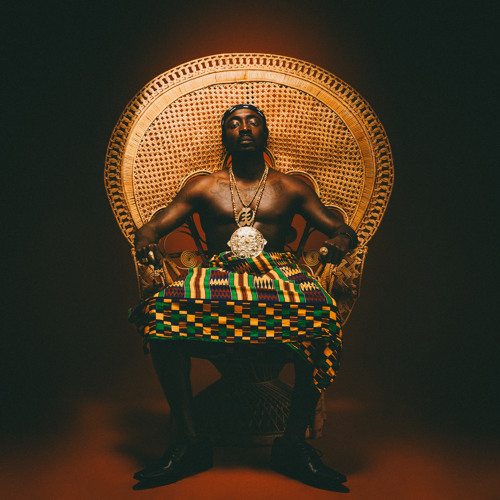
The Rise of Negros Tou Moria: Age, Family, Biography, and the Cultural Power of the Afrogreek Icon
In the global evolution of hip-hop, identity operates as a profound canvas for social commentary. Few modern artists embody this truth as strikingly as Negros Tou Moria (Black Morris). As the trailblazing pioneer of the “Afrogreek” movement, he has single-handedly reconfigured the landscape of Greek urban music. By masterfully fusing the heavy cadences of modern boom-bap and trap with the rebellious, historical soul of Rembetika (traditional Greek urban folk music), he has bridged centuries of displacement and resilience.
This comprehensive biography dives deep into the life, family roots, artistic milestones, and cultural significance of Kevin Ansong—the man behind the moniker—and explores how he became a vital voice for twenty-first-century multicultural Athens.
Quick Stats & Vital Facts
Before diving into his formative years and multi-decade musical journey, here is an overview of the foundational details surrounding Negros Tou Moria’s life and career:
| Attribute | Profile Details |
| Real Name | Kevin Ansong (also known as Kofi Ansong) |
| Stage Monikers | Negros Tou Moria, Black Morris, Kofi O Ataktos |
| Date of Birth | March 29, 1991 |
| Current Age | 35 years old |
| Birthplace | Ampelokipi, Athens, Greece |
| Nationality | Greek (of Ghanaian heritage) |
| Primary Genres | Hip-Hop, Boom-Bap, “Trabetiko” (Trap-Rembetika fusion) |
| Key Associations | Taki Tsan, 307 Squad, Christopher King, Onassis Stegi |
Early Life, Family Roots, and the Athenian Districts
Kevin Ansong was born on March 29, 1991, in the economically pressed district of Ampelokipi in Athens, Greece. His parents were immigrants from Ghana who moved to Southern Europe in search of better economic opportunities. Growing up in a working-class household, Kevin’s childhood was deeply scored by rhythm; as a young boy, he would notoriously use kitchen forks and spoons to drum out intricate, syncopated beats on household furniture.
When he reached the age of 15, his family relocated to Kypseli, an incredibly diverse and densely populated neighborhood in Athens. Raised alongside his older brother by their mother, Kevin found himself navigating a vibrant but complex socio-cultural matrix. Kypseli and the surrounding areas near Plateia Amerikis—which locals cheekily rebranded as Plateia Afrikis (Africa Square)—were home to a vast mosaic of immigrant communities stemming from Ghana, Congo, Sudan, Afghanistan, and Albania.
The Struggle for Legal Identity
Growing up as a second-generation visible minority in Greece during the 1990s and 2000s came with severe systemic friction. For decades, children born to immigrant parents on Greek soil were denied native citizenship at birth, trapped in a bureaucratic liminal space. They spoke fluent Greek, studied Greek history, and absorbed the local geography, yet remained legally stateless. This foundational tension heavily informed Ansong’s worldview and eventually became the catalyst for his artistic awakening.
Instead of rejecting this complex duality, he proudly coined and championed the term “Afrogreek”. The concept stands as a dual manifesto: honoring the West African oral traditions, musical syncopation, and heritage passed down by his family, while fiercely claiming his absolute right of belonging to the streets of Athens.
Decoding the Moniker: The Black of Morias
To understand the genius behind Negros Tou Moria’s career, one must look closely at the historical architecture of his stage name. In the original Greek language, the name is a deliberate, witty subversion of Geros tou Moria (The Old Man of Morias).
Historical Context: Geros tou Moria was the revered moniker of Theodoros Kolokotronis, the legendary general and supreme military commander of the 1821 Greek War of Independence against the Ottoman Empire. “Morias” was the traditional, historic name for the Peloponnese peninsula.
By replacing Geros (Old Man) with Negros (Black), Ansong executed a brilliant act of cultural reclamation. He injected his Black identity directly into the sacred mythological foundation of modern Greek statehood. Through this title, he signaled that he and his peers were not perpetual outsiders looking in; rather, they were the modern-day revolutionaries navigating the concrete terrain and societal struggles of contemporary Greece.
The Life and Career: From Street Freestyle to Global Art Stages
Negros Tou Moria’s musical genesis began in the spring of 2008 when he, along with neighborhood friends like the producer S.T.F., started executing raw freestyles and battle raps to pass the time in Kypseli. This informal collective morphed into a group called Paraxena Simadia (Strange Signs). By late 2009, his undeniable talent caught the ear of local legend Taki Tsan, a founding member of the iconic rap group Zontanoi Nekroi.
Recognizing the young artist’s unparalleled flow, Taki Tsan took Kevin under his wing. Ansong served as the official backing voice for Taki Tsan during his high-profile Rima Gia Chrima 2 nationwide tour in 2010. This exposure catalyzed his career, giving him the industry blueprint needed to branch out independently.
The 307 Squad and Early Mixtapes
By 2011, as his previous group cooled down, Ansong founded the 307 Squad—an evolution of a tight-knit Athens graffiti crew. Collaborating closely with DJ and producer Evan Sbk, they began churning out heavy, localized tracks.
-
2012: Released his first official mixtape, M.M.P.T.P., a raw, uncompromising 15-track underground statement.
-
October 2012: Partnered with the artist Los Xaotikos to drop the joint album U SWAK (#The Ace Is Black).
-
2014: The underground groundswell culminated at the Thessaloniki Hip Hop Festival, where he was formally awarded Best New Artist of the Year.
The Musical Blueprint: Hip-Hop Meets Rembetika
What separates Negros Tou Moria from standard European trap acts is his profound sonic philosophy. While the broader Athenian rap scene heavily imitated the commercial sounds of Atlanta, London, or Paris, Ansong turned inward to Greece’s own countercultural musical past: Rembetika (Rebetiko).
Originating in the late 19th and early 20th centuries, Rembetika was the music of the mangas—marginalized refugees, urban outcasts, and underworld figures living in the ports of Piraeus and Thessaloniki. It was acoustic music played on the bouzouki and baglamas, dealing explicitly with poverty, exile, police brutality, and prison life. Ansong recognized a flawless parallel between early 1920s Rembetika and late 1980s American gangsta rap. Both were:
-
Sired by displaced, disenfranchised communities pushed to the social fringe.
-
Steeped in a highly specific street slang and underground code.
-
Systematically criminalized, censored, and condemned by upper-class elites before eventual mainstream adoption.
[Traditional American Hip-Hop]   +   [1920s Greek Rembetika]
      (Boom-Bap / Trap)                   (Urban Refugee Blues)
                      \                 /
                       \               /
                    [ NEGROS TOU MORIA ]
                  "Trabetiko" Sonic Fusion
By layering historic folk samples and urban acoustic inflections beneath hard-hitting modern drums, he created a brand new sub-genre. His artistry expanded further when he partnered with Grammy-winning musicologist and producer Christopher King, digging deep into traditional folk music from the Epirus region and Asia Minor to trace the shared roots of struggle across different continents.
Landmark Discography and Global Critical Acclaim
Negros Tou Moria’s career is defined by structurally complex, long-form conceptual albums that serve as audio time capsules of urban Athens.
#Mpesa (2016)
His formal studio debut, #Mpesa (introducing his alter ego Kofi O Ataktos), was a masterclass in jazz-rap and boom-bap poetry. It forced mainstream critics to recognize his linguistic agility. Rather than leaning on English loanwords, Ansong utilized an incredibly rich vocabulary comprising archaic Greek terminology, historical Athenian underworld slang (mangika), and modern immigrant patois spoken in the city’s plazas.
H.E.A.L.T.H. (2018) & documenta14
In 2018, he dropped H.E.A.L.T.H., a cutting conceptual acronym standing for How Economy And Love Tortured Humanity. The album laid bare the psychological toll of the prolonged Greek financial crisis on the youth.
His multidisciplinary brilliance also caught the international art world’s eye. During the prestigious global contemporary art exhibition documenta14, which split its programming between Kassel, Germany, and Athens, Negros Tou Moria was selected as a headline performance artist. His piece, Black Odyssey, fused spoken word, historical Greek garments (fustanella), and open-air public performance to dissect migration patterns across the Mediterranean.
Mavri Ellada (2025)
Confirming his trajectory as a world-class musician, his landmark album Mavri Ellada (“Black Greece”) achieved historic international acclaim. Melding west-coast G-funk synths and driving Afrobeats with raw, uncompromising Greek bars, the record caught the attention of global press. The Guardian ranked Mavri Ellada as the No. 2 Best Global Album, cementing his legacy far beyond regional linguistic borders.
Expansion Into Cinema and Theater
Beyond the recording studio, Ansong’s highly theatrical delivery and deep understanding of performance art paved the way for cross-industry success. He has lent his distinct voice and commanding presence to productions with the National Theater of Greece and showcased avant-garde projects at the historic Athens and Epidaurus Festival.
In 2023, he made a major leap into feature-length cinema. He starred in the critically acclaimed film Black Stone, directed by Spiros Jacovides. The film—a sharp, tragicomic mockumentary exploring racism, overbearing Greek family dynamics, and institutional decay—earned widespread praise, proving that Ansong’s magnetic charisma translates seamlessly to the silver screen.
The Cultural Legacy of an Icon
Negros Tou Moria’s enduring legacy is measured by the cultural glass ceilings he shattered. Alongside global icons like NBA superstar Giannis Antetokounmpo, Ansong helped push a vital, nationwide conversation regarding what it truly means to be Greek in the modern era.
Through his independent musical releases, theatrical roles, and community stewardship, he created a safe, unapologetic blueprint for younger second-generation immigrant artists across Europe. He demonstrated that true creative immortality lies not in copying foreign templates, but in leaning completely into the beautiful, complex reality of one’s own lived experience.